Construction Asset Management Software
Eliminate the “project after the project.”
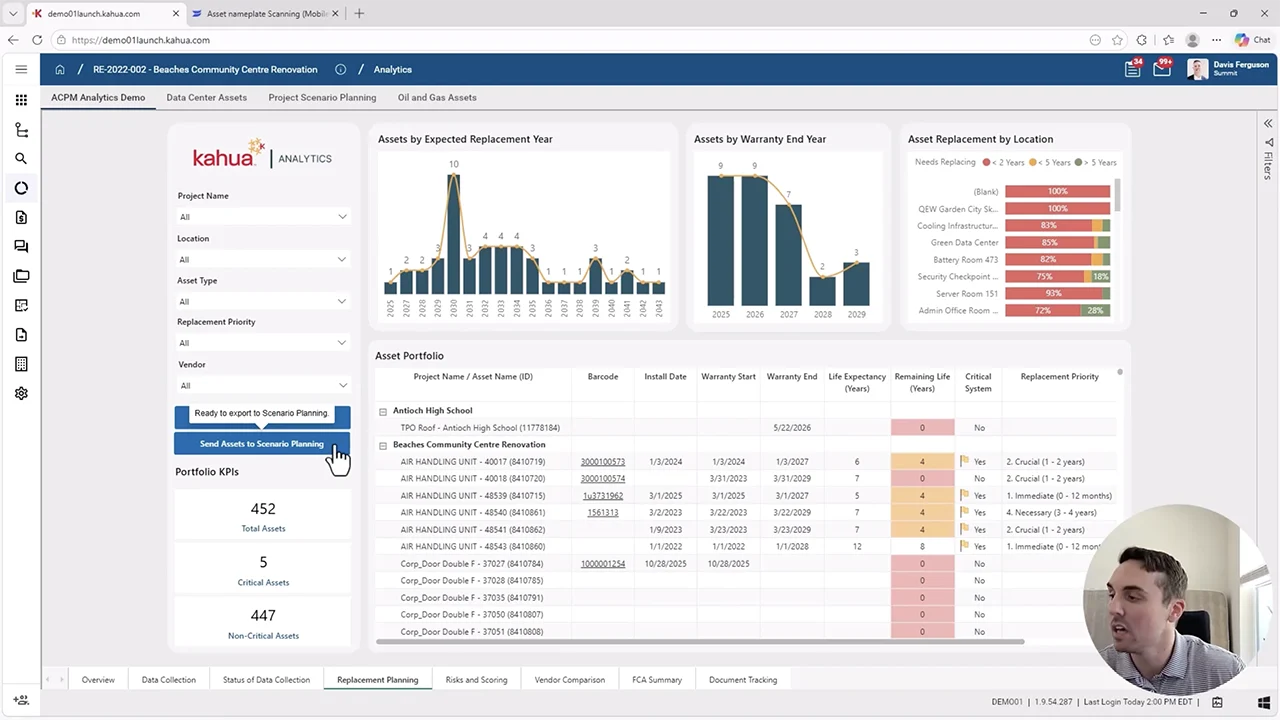
Kahua’s Asset Centric Project Management® (ACPM) approach keeps owner-controlled asset data current from new construction, facility upgrades, condition assessments, to operations.
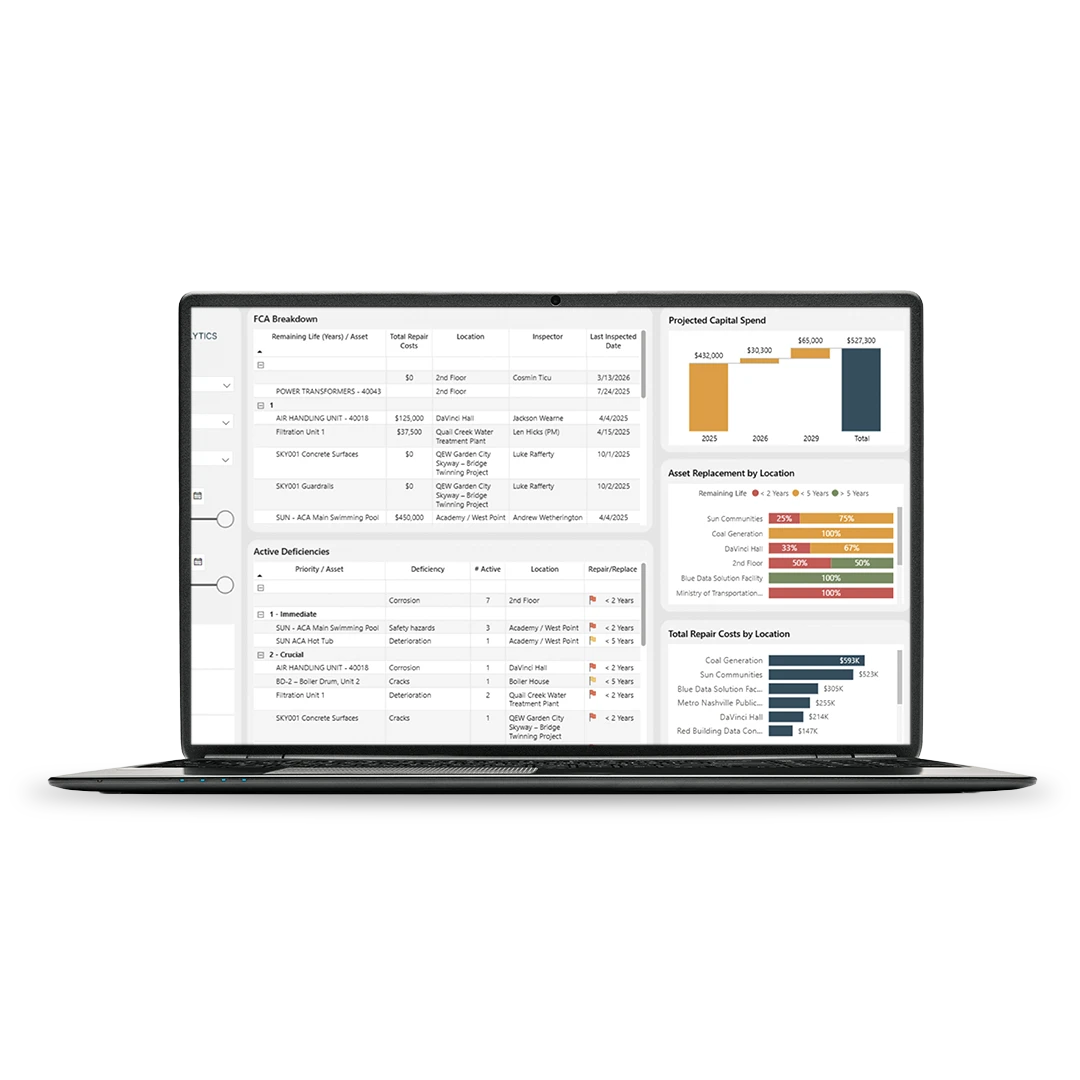
Collect asset data from day one.
On new construction, define what operations will need early, then collect serial numbers, warranty details, and other information as assets are installed.
Connect asset data to existing operational systems.
Sync asset data with BIM, Esri, IBM Maximo, and other EAM and CMMS systems, then deliver it directly into the tools owners use to operate facilities.
Explore all integrations
Preserve context for the next project.
Keep asset history available after handover, giving facility and capital teams a stronger starting point for maintenance, renewals, and future upgrades.
For older facilities, capture and verify asset information as upgrades happen, gradually replacing incomplete files with a usable digital record.
Keep asset records under owner control.
Tie information to the equipment or facility it describes, keeping owner-controlled records easy to find and update across projects and upgrades.
Connect project work to operations.
Move structured asset data into enterprise asset and maintenance systems instead of asking operations to re-enter the same information by hand.
FAQs
Frequently asked questions
Learn how Kahua’s construction asset management software supports new construction, existing facilities, condition assessments, and long-term operations.
Construction asset management software helps owners maintain a usable record of the equipment, systems, and other assets inside a facility. Instead of organizing information only around a project, an asset-centric approach connects the work and supporting records to the asset itself.
That record can begin during new construction or develop over time as an existing facility is repaired, assessed, renovated, or expanded.
An asset-centric approach works just as well for existing facilities or projects as it does for new construction. On new construction, teams can define asset information requirements during planning and begin building the record as the project progresses. For example, serial numbers, warranty details, and supporting documentation can be captured when equipment is selected and installed.
Because the information is collected as part of delivery, operations doesn’t have to reconstruct the asset record after the building is complete.
Facility condition assessments are easier when assessors can update an existing digital asset record rather than rebuild the history of each facility from scratch.
Current conditions, recommended work, and supporting information remain connected to the asset. Future assessments can build on that record instead of hunting through old reports, contractor files, and disconnected PDFs to determine what changed.
Contractors and consultants change from one project to the next, but the owner remains responsible for the facility. Keeping asset information in an owner-controlled environment preserves the record across project teams, upgrades, and assessments.
Future teams can find what they need without depending on information stored on a contractor’s computer, in an email inbox, or inside a system the owner no longer controls.
Operations teams receive a searchable asset record connected to the project and facility history behind it. Instead of starting with folders of static closeout files, they have clearer information about what was installed, what work has been completed, and what may need attention next.
Yes. Kahua has many integrations to connect asset information with building information modeling, geographic information systems, enterprise asset management platforms, and computerized maintenance management systems.
These connections allow the owner-controlled asset record to support the operational systems facilities teams already use without requiring the same information to be entered again by hand.
Kahua Resources
Explore resources for asset-centric project management.

Explore Related Solutions